Lycopodium – Clubmoss Mature Stem
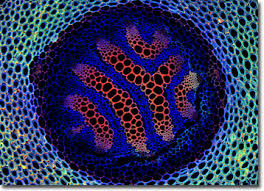
Clubmosses are seedless vascular plants characterized by an alternation of generations between a dominant spore-producing sporophyte and a small, subterranean gametophyte. The mature sporophyte typically exhibits creeping or prostrate stems, although some species develop erect forms. Stems are densely branched and covered with small, needle- or scale-like leaves (microphylls).
In most species, specialized spore-bearing leaves are organized into terminal cone-like structures called strobili. However, some members of Lycopodium, such as L. lucidulum, bear sporangia at the bases of dispersed leaves rather than in compact cones. The sporangia produce a single spore type (homosporous), which germinates into an underground prothallium.
The gametophyte (prothallium) supports sexual reproduction, producing both antheridia (male organs) and archegonia (female organs). In species such as L. clavatum, the prothallium is small, saucer-shaped, and nutritionally dependent on symbiotic saprotrophic mycorrhizal fungi. Fertilization may occur after extended development, and multiple growing seasons can pass before a new sporophyte emerges.
In autofluorescence microscopy, mature clubmoss stems exhibit intrinsic fluorescence from lignified vascular tissues and cell wall components, allowing structural visualization without exogenous staining..