Confocal Microscopy
Laser scanning confocal microscopy is one of the most significant advances in optical microscopy, enabling high-resolution imaging deep within living and fixed cells and tissues. By using spatial filtering to eliminate out-of-focus light, confocal microscopy produces sharp optical sections that can be reconstructed into three-dimensional images. Rapid technological progress in lasers, detectors, filters, fluorophores, and computing systems has accelerated the development and accessibility of modern confocal instruments.
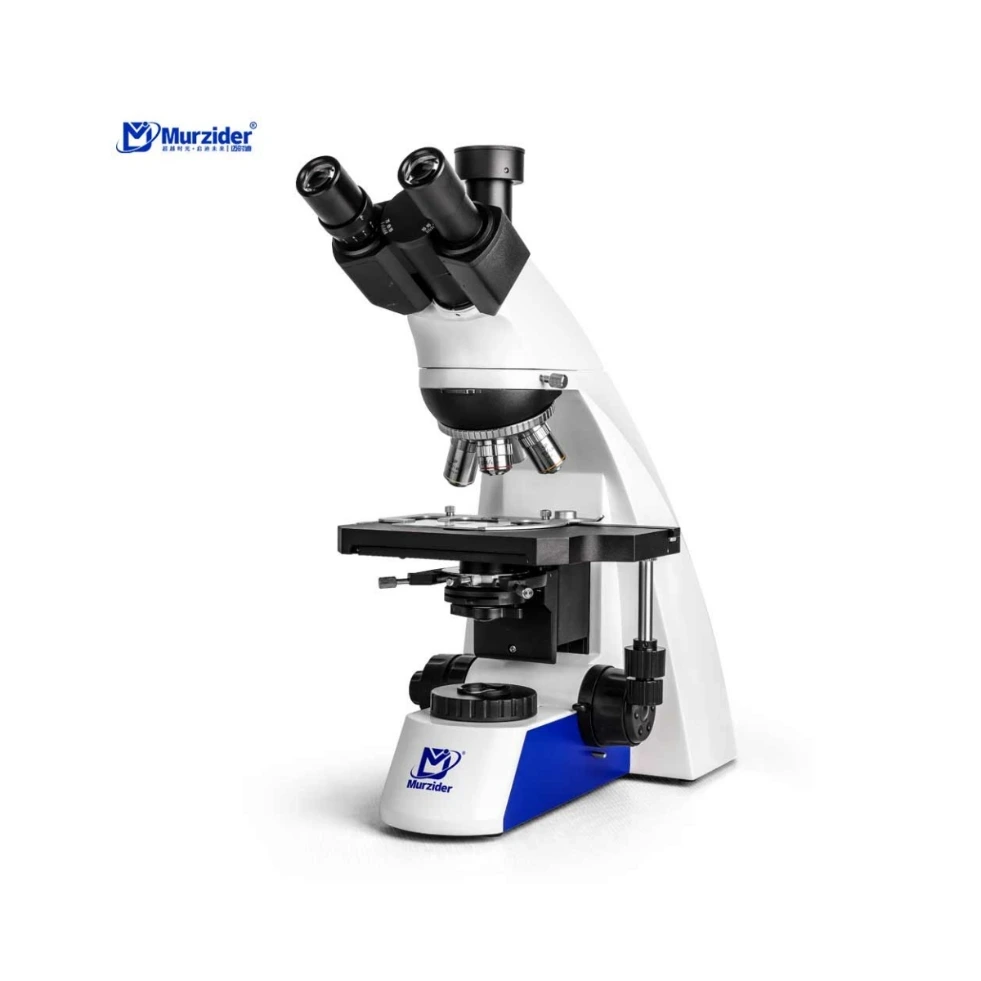
Introduction to Confocal Microscopy
Confocal microscopy offers major advantages over conventional widefield microscopy, including improved depth control, reduced background fluorescence, and the ability to acquire serial optical sections from thick specimens. The technique relies on spatial filtering—typically a pinhole aperture—to reject out-of-focus light, significantly enhancing contrast and resolution. Its growing popularity stems from ease of use with standard fluorescence preparations and its powerful applications in imaging both live and fixed biological samples.
Fluorescence Excitation and Emission Fundamentals
Fluorescence is a form of photoluminescence in which molecules absorb light at a specific wavelength and emit light at a longer wavelength after a brief excited-state lifetime. It differs from phosphorescence, which involves a much longer emission lifetime. In confocal microscopy, fluorescence provides high sensitivity and specificity for visualizing biological structures and processes.
Fluorophores for Confocal Microscopy
Confocal microscopy relies heavily on fluorescent probes that selectively bind to biological targets such as proteins, nucleic acids, and cellular organelles (e.g., mitochondria, Golgi apparatus, nucleus). Fluorophores are also used to monitor physiological parameters such as pH, ion concentrations, membrane potential, and reactive oxygen species. These probes enable studies of cellular integrity, trafficking, signaling pathways, enzymatic activity, and genetic mapping.
Interference Filters in Fluorescence Microscopy
Modern fluorescence imaging depends on advanced thin-film interference filters to precisely control excitation and emission wavelengths. These filters significantly enhance image quality compared to earlier dye-based glass filters and are essential for optimizing fluorescence detection in high-resolution and quantitative applications.
Resolution and Contrast in Confocal Microscopy
Resolution in confocal microscopy is fundamentally limited by the numerical aperture of the objective lens and the wavelength of light. However, practical resolution also depends on photon collection efficiency, detector sensitivity, optical aberrations, and digital sampling. Contrast is closely linked to signal strength and noise levels, which directly affect image clarity and quantification accuracy.
Laser Fundamentals and Systems
Lasers (Light Amplification by Stimulated Emission of Radiation) generate intense, coherent, monochromatic light. In confocal microscopy, lasers serve as precise excitation sources for fluorescence imaging. Commonly used laser systems support applications such as photobleaching recovery (FRAP), lifetime imaging, optical trapping, and total internal reflection fluorescence (TIRF).
Non-Coherent Light Sources
Although lasers dominate confocal systems, non-coherent light sources such as tungsten-halogen and arc lamps are traditionally used in widefield microscopy and may serve complementary roles in certain confocal configurations. The choice of illumination source depends on instrument design and application requirements.
Confocal Microscope Objectives
The objective lens is the most critical optical component in a confocal microscope. It determines resolution, contrast, imaging depth, and field of view. In confocal systems, the objective also functions as the illumination condenser and must perform efficiently across multiple wavelengths and low light levels while minimizing aberrations.
Scanning Systems in Confocal Microscopy
Confocal imaging requires sequential point-by-point signal collection. Three principal scanning methods are employed:
Stage scanning – moving the specimen relative to a stationary beam
Beam scanning – scanning the excitation beam across a stationary specimen
Spinning disk (Nipkow disk) – simultaneous scanning using multiple apertures
Each method offers distinct advantages depending on imaging speed, resolution, and specimen sensitivity.
Signal-to-Noise Considerations
Digital confocal imaging requires careful consideration of signal sampling and noise. Measured intensity values approximate photon counts and inherently fluctuate due to noise. Signal-to-noise ratio (SNR) directly influences image contrast, resolution, and quantitative reliability.
Electronic Light Detectors
Confocal microscopy commonly uses highly sensitive detectors such as photomultiplier tubes (PMTs), photodiodes, and charge-coupled devices (CCDs). Because fluorescence emission is spatially filtered by a pinhole, light levels are often extremely low, requiring detectors with high sensitivity and rapid response.
Electronic Imaging Detectors
Modern fluorescence microscopy increasingly relies on electronic imaging rather than traditional film-based photomicrography. Advanced detectors determine sensitivity thresholds, resolution capability, and the ability to capture dynamic cellular processes.
Fluorochrome Reference Data
Fluorochrome tables provide peak excitation and emission wavelengths and recommended laser sources. However, fluorophore behavior varies depending on environmental conditions, solvents, and applications, leading to variations in reported spectral data.
Glossary and Interactive Learning Tools
Due to the complex terminology of fluorescence and confocal microscopy, glossaries and interactive tutorials are valuable educational tools. Interactive modules help clarify concepts such as resolution, contrast, detector operation, and scanning mechanisms through real-time parameter adjustments.